
Adobe has announced Anil Chakravarthy as its new president and CEO, succeeding Shantanu Narayen, who will transition to executive chair. Chakravarthy, an alumnus of Banaras Hindu University and IIT, will assume the role on December 1, leading the company into an AI-driven era.

A two-day weekend would help employees recover physically and mentally. They would return better prepared for branch work that demands patience, judgment, and accuracy, asserts Tamal Bandyopadhyay.

This was perhaps a missed opportunity for India to spotlight a core domestic challenge: The scale of workforce preparation required for a young, populous, rapidly growing country seeking to reach net zero, points out Radha Roy Biswas.


Generative AI is transforming workplaces but at a cost -- there are fewer jobs for young workers just entering the workforce, reveals a Goldman Sachs report.

'It was great to have the Indian roots reflected in full force.'

Despite the alarming figures on job displacement, AI is expected to generate millions of new roles, echoing historical trends of technological transformation.
According to the report, nearly 80 billion cubic meter increase in municipal water demand is expected in the world cities by 2025, and Mumbai and Delhi tops the list of the 20 countries that are expected to experience the maximum demand.

Billionaire industrialist Mukesh Ambani described his 2016 return to the telecom industry with Reliance Jio as the "biggest risk" of his life, saying that even if analysts' predictions of financial failure had come true, it would still have been worth it for the role it played in transforming India digitally.

India's human development indicators show that deprivation extends well beyond the 22 per cent of population who live below the official poverty line.
Cities, the world over, are bursting at the seams. With urbanisation on the rise, urban populations have now outnumbered rural populations in many nations, and the 'exodus' shows no signs of abating.
Internet has a sweeping impact on growth, prosperity and has created 2.4 jobs for every job that it has destroyed.
Here are India's top 10 urban centres in terms of their respective gross domestic product in 2009 based on purchasing power parity, according to a PricewaterhouseCoopers study. . .
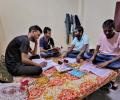
Out of 24,230 IIT and NIT grads, about 8,000 students didn't find any takers during campus placement drives this year.
Move to urban living is lifting the incomes of millions of people around the world.
Over the past three decades, a global labour market started taking shape.
New cities -- mostly from India, China and Latin America will either be added to the list or will improve their rankings.
McKinsey Global says these cities would generate about 47 per cent of expected global GDP by 2025.
Based on Foshan's projected GDP growth from 2010 to 2025, Foreign Policy and the McKinsey Global Institute ranked it as the world's 13th most dynamic city.
Of these, 150 million have not even completed primary education. Providing job-relevant vocational skills to these workers is a unique challenge that India faces, said the report.Vocational education from the secondary school level should be pursued, and efforts should be made to retrain 285 million adult workers with just primary schooling or less, according to Anu Madgavkar, senior fellow, McKinsey Global Institute.

Enabling labour to become more globally mobile can produce higher remittances with powerful 'brain gain' dividends.
The issue of urbanization, if not addressed immediately, might lead to serious repercussions for major Indian cities and potential deterioration in quality of life, strain on resources and reduced investments in India's urban centres, according to a 21-month-long study conducted by the McKinsey Global Institute.
Working individuals spend two-and-a-half hours on an average writing emails every day, a new study has found, suggesting changes in the way people use computers that could make them 25 per cent more productive.
The metropolitan regions of Mumbai generally depend on the core city for its identity and economy. It could be differently designed and developed so the metropolitan region has a better economic activity and help depopulate Mumbai, writes Mahesh Vijapurkar.

India may have to lean more on West Asian nations for supplies of liquefied petroleum gas (LPG), a cooking fuel, in the coming years after Indian state-run refiners drew up big plans to diversify into producing more profitable petrochemicals. This shift leads to reduced LPG output, Indian refining executives said. The mantra for state-run oil companies, from Indian Oil Corporation (IndianOil) to liquefied natural gas (LNG) importer Petronet LNG, which are looking to diversify their businesses from lower-margin fuels, has been value-added petrochemicals.
Some of the world's richest cities are also the most populous.

The report has identified some areas that need attention from India's policymakers.
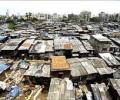
Decisions taken today will determine urban India's shape

Nearly $1.2 trillion (Rs 53.1 lakh crore) is the capital expenditure needed to fund construction of infrastructure for water, sewage, transport and affordable housing among others, with 40 per cent of the estimated 1.47 trillion Indians living in urban areas by 2030.
Interestingly, communications, which accounts for only 2 per cent of spending today, will be one of the fastest expanding categories with growth of over 13 per cent a year.

What do we need more of: Leaders who dominate global institutions or local leaders with a 'Make-in- India' mindset?

Mohan will be responsible for aligning of teams, overall strategy in this country and driving Facebook's investments in India
That is bad news for officials taking part in discussions at the International Monetary Fund and World Bank meetings this week.

On Friday, Biden announced his intent to appoint 14 people to the advisory committee, which provides overall policy advice to the United States trade representative on matters of development, implementation, and administration of the US trade policy.

The mercury soared to 46.2 degrees Celsius at Najafgarh, making it the hottest place in the capital.
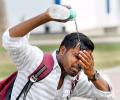
Heatwaves claimed more than 17,000 lives in 50 years in India, according to a paper authored by M Rajeevan, former secretary of Ministry of Earth Sciences, along with scientists Kamaljit Ray, S S Ray, R K Giri and A P Dimri.
An additional 68 million women could potentially enter the labour force over the coming decade.

'We all work hard and save money, and later spent it in hospitals!'
